By Sonya Worthy Okolo, PT
Abdominal bloating and distension are among the most common GI complaints experienced by many people with Irritable Bowel Syndrome (IBS), Constipation, Endometriosis, Adenomyosis, and other gut-brain interaction disorders. These symptoms can result from several overlapping mechanisms including:
- Diet
- Constipation
- Hypersensitivity of nerves in abdominal wall
- Muscle coordination issues like abdomino-phrenic dyssynergia (a mismatch between the diaphragm and core muscles containing abdominal pressure)
- Muscle coordination issues like pelvic floor dysfunction (pelvic floor muscles that fail to relax during bowel movements can impair gas and stool evacuation)
Abdominal bloating is rarely about just gas. It’s a neuromuscular and biomechanical problem in many people, especially those with pelvic floor dysfunction or IBS-like disorders.
How Pelvic Floor Therapy Helps with Bloating:
- Improve Pelvic Floor Muscle Coordination – When the pelvic floor doesn’t relax properly during defecation or gas passage, stool and gas can become “trapped,” worsening bloating.
- Practical tip: Practice relaxation by visualizing pelvic floor muscles widening and lengthening…thing “let the pelvic floor soften as I breath in”.
- Address Breathing Patterns – When breathing patterns are altered due to stress, pain, posture, or muscle imbalance, the diaphragm may move inefficiently. This can disrupt abdominal pressure control and contribute to distension. Research shows people with pain or muscle imbalance often have abnormal diaphragm positioning and movement.
- Practical tip: Practice diaphragm breathing daily: Lie on your back with a book on your belly. Breathe slowly through the nose, aiming for belly rise under the book (not chest).

- Practical tip: Practice diaphragm breathing daily: Lie on your back with a book on your belly. Breathe slowly through the nose, aiming for belly rise under the book (not chest).
- Restore Thoracic Spine & Ribcage Mobility – If the thoracic spine is stiff, breathing mechanics change — often increasing strain on the abdominal wall. Restricted rib mobility can contribute to pressure mismanagement and visible bloating.
- Practical tip: Lie over a foam roller or ball 2-3 minutes daily. Perform ribcage breathing with hands behind the head working to expand fully.
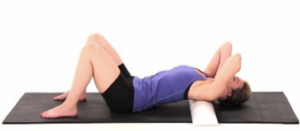
- Practical tip: Lie over a foam roller or ball 2-3 minutes daily. Perform ribcage breathing with hands behind the head working to expand fully.
- Core Muscle Retraining – The Transverse Abdominis “TA” is often called the body’s “natural corset” which regulates abdominal pressure and stabilizes the trunk. When the TA is poorly coordinated, whether from weakness, habitual bracing, or breath-holding, pressure becomes dysregulated. The abdomen may bulge outward instead of being gently supported.
- Practical tip: Exhale slowly. Gently draw the lower abdomen inward about 20–30%. Keep breathing. Core training should be gentle, avoiding excess tension, and emphasize coordination with breathing and functional integration (such as bend, lift).
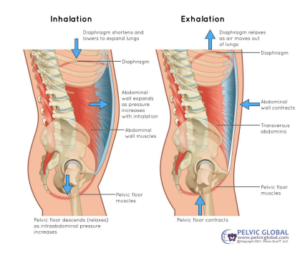
- Practical tip: Exhale slowly. Gently draw the lower abdomen inward about 20–30%. Keep breathing. Core training should be gentle, avoiding excess tension, and emphasize coordination with breathing and functional integration (such as bend, lift).
- While pelvic floor dysfunction and breathing mechanics are often overlooked, diet remains a core contributor. Research supports The Low-FODMAP Diet (eliminating fermentable carbohydrates) has significant symptom improvement in bloating and distension for patients with IBS and related disorders.
-
- Practical Tip: Work with a dietitian to trial the elimination phase (typically 4–8 weeks). Track foods that trigger symptoms and reintroduce systematically.
- Practical Tip: How you eat is just as important as what you eat. Sit erectly and focus on “chewing to liquid”, slowly, instead of partial breakdown of food in a hurried way. Replacing carbonated drinks with regular water, along with mindful eating, helps to avoid swallowing too much air.
By combining these physical strategies with dietary adjustments, you address both the root muscular and dietary contributors giving you a practical roadmap to feel lighter and more comfortable. Oasis PT & Pelvic Health offers holistic pelvic floor therapy for all genders and life stages. The Team offers a personalized, comprehensive care plan specializing in many conditions rooted in pelvic floor-core dysfunction. To determine if we are the right fit for you, contact our office for a free 10 min consultation.
References:
- Kolar, P. et al. Postural Function of the Diaphragm in Persons With and Without Chronic Low Back Pain. This case-control study investigated diaphragm mechanics and discovered that individuals with chronic musculoskeletal dysfunction have altered diaphragm position and movement during breathing tasks, supporting the role of diaphragm mechanics in core stability and intra-abdominal pressure regulation.
- Cangemi, D. J. & Lacy, B. E. A Practical Approach to the Diagnosis and Treatment of Abdominal Bloating and Distension. This review highlights the multifactorial causes of bloating — including diet, abdomino-phrenic dyssynergia, constipation, and visceral hypersensitivity — and outlines evidence-based strategies for evaluation and personalized treatment